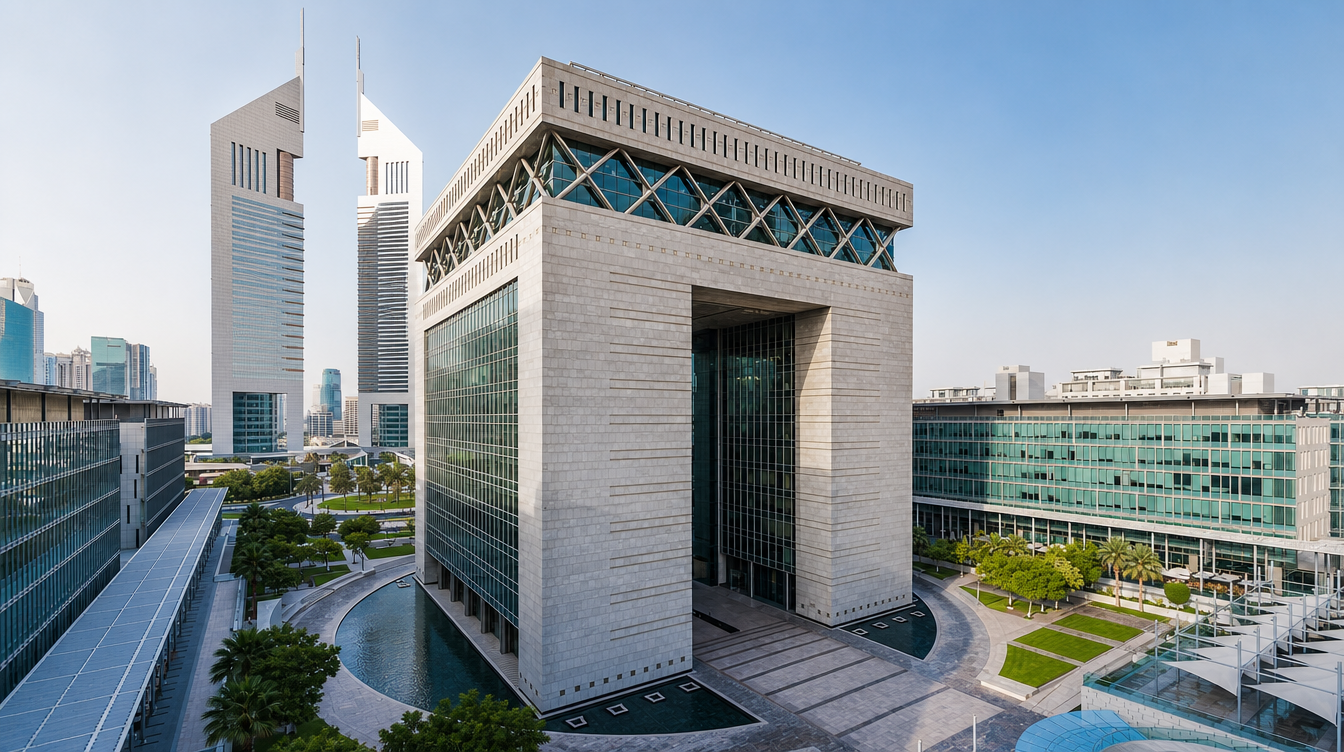
Round numbers usually flatter more than they inform, but the one the Dubai International Financial Centre announced this week deserves the attention it's getting. At the end of the first half of 2026, DIFC's active registered companies reached 10,018, up 30% in twelve months, with 2,318 new firms joining in six months. For a financial centre that opened on largely empty ground in 2004, crossing five digits is less a birthday candle than a data point in a trend line that investors should read carefully.
The headline number also travels with quieter figures that say more about direction than size. AI, FinTech and innovation firms grew 39% to 1,933. Family-related entities rose 36% to 1,408, and foundations jumped 67% to 1,409. Regulated financial services companies, the centre's core, passed 1,000 for the first time, reaching 1,134. Growth this broad, across sectors with different economics and different reasons for choosing a jurisdiction, is what makes the milestone worth analysing rather than merely reporting.
| Indicator | Figure |
|---|---|
| Active registered companies | 10,018 (+30% year on year) |
| New companies in H1 2026 | 2,318 |
| Regulated financial services firms | 1,134 (+16%) |
| AI, FinTech & innovation companies | 1,933 (+39%); 361 joined in H1 |
| Banking & capital markets firms | 327 |
| Insurance & reinsurance firms | 165 (gross written premiums: $4.2bn in 2025) |
| Wealth & asset management firms | 592 |
| Family-related entities | 1,408 (+36%) |
| Foundations | 1,409 (+67%) |
| Projected value of AI-native transformation | Dh12.9bn ($3.5bn) and 25,000 jobs |
Source: DIFC H1 2026 results, July 2026.
DIFC's Growth Reflects Dubai's Position as a Global Financial Hub
A financial centre grows for one reason: institutions that could put their regional headquarters anywhere keep choosing it. The mechanics behind that choice at DIFC are worth spelling out, because they explain why the growth has compounded rather than plateaued.
The legal framework does the heaviest lifting. DIFC operates its own common-law jurisdiction with independent courts, familiar to any institution that has operated in London, Singapore or Hong Kong. For banks, funds, and insurers whose business is enforceable contracts, that familiarity removes the largest single source of hesitation about a new market.
"DIFC's exceptional performance of surpassing the 10,000 active registered companies for the first time, reflects the continued confidence that global financial institutions, investors and innovators place in the Centre's legal and regulatory framework, and its role as a gateway to growth opportunities regionally and globally." Sheikh Maktoum bin Mohammed bin Rashid Al Maktoum, First Deputy Ruler of Dubai and President of DIFC
Geography compounds the legal advantage. Dubai sits inside a working day of Europe, Asia, and Africa, which makes it a natural coordination point for institutions covering the Middle East, Africa and South Asia. The city's rise to seventh place in the Global Financial Centres Index, its highest ranking ever and the top position across that entire region, formalises what location decisions had already been signalling.
The third ingredient is patience. DIFC's growth is the output of a two-decade build: courts first, then regulation, then sector ecosystems, then innovation infrastructure. Investors tend to trust compounding they can trace, and this trend line traces cleanly.
Why Global Financial Institutions Continue Expanding in DIFC
The sector data shows a centre operating at scale across every financial vertical rather than leaning on one.
Banking and capital markets firms number 327, and the recent arrivals are instructive: Citadel, Bank of Canada, JP Morgan International Advisors, ICICI Prudential Asset Management, Allianz Trade Middle East and Sun Life have all established regional offices since mid-2025. Names like these matter beyond prestige, because institutional location decisions are diligence-heavy; each arrival is effectively a completed audit of the jurisdiction that other boards can reference.
Wealth and asset management is now the centre's largest regulated cluster at 592 firms, a concentration that feeds on itself: managers locate near allocators, allocators near managers, and service providers near both. Insurance and reinsurance, at 165 firms, made DIFC the region's largest hub by gross written premiums, which reached $4.2 billion in 2025. Private equity and venture capital sit inside the same ecosystem, drawn by the fund structures, the courts, and increasingly by the deal flow the innovation cluster generates.
"DIFC is the region's only financial centre operating at scale across all sectors, and our ecosystem continues to grow faster and attract more regional offices than the market." Arif Amiri, Chief Executive Officer, DIFC Authority
Analysts should treat any single institution's marketing with care, but the sector-by-sector numbers above are consistent with the claim, and that breadth is precisely what distinguishes a financial centre from a financial niche.
The Rise of AI, FinTech and Innovation in DIFC
The fastest-growing slice of the 10,018 is also the most strategically interesting. AI, FinTech and innovation firms grew 39% year on year to 1,933, with the DIFC Innovation Hub adding 361 companies in the first half alone. Nearly one in five DIFC companies is now a technology or innovation business, a ratio that would have seemed implausible for a financial centre a decade ago.
The more consequential move is structural. DIFC has announced plans to become what it calls the world's first AI-native financial centre, embedding artificial intelligence across its regulation, infrastructure, operations and talent development rather than treating AI firms as tenants. The projected economics attached to that transformation are Dh12.9 billion ($3.5 billion) in economic value and 25,000 jobs. The Dubai AI Campus and the Ignyte platform supply the practical scaffolding: funding access, mentorship, and business support for founders building in or around financial services.
For investors, two readings coexist. The optimistic one is that DIFC is positioning itself where financial services are heading rather than where they've been, and the 39% growth suggests founders believe it. The measured one is that projected value and jobs are projections, and AI-native regulation is a genuinely novel experiment whose details will matter enormously. Both readings agree on the direction of ambition, and ambition backed by 1,933 operating companies is not merely rhetorical.
How DIFC Supports International Business Expansion
Strip away the sector specifics and the centre's appeal to any international company reduces to a short list. Predictability: an independent legal system and an established regulator reduce the variance that makes boards hesitate. Connectivity: physical (two global airline hubs), financial (the banking and capital markets cluster), and professional (the law firms, auditors and advisers that follow institutions). Talent: a jurisdiction global specialists are willing to relocate to, supported by programmes like DIFC Academy, which expanded its offering 22% to 144 programmes in the half. And market access: a base from which the Gulf, Africa and South Asia are coverage regions rather than long-haul abstractions.
Demand for physical space tells its own story: the 600,000 square foot DIFC Square development fully leased before completion, and the new Zabeel District has been launched to absorb the next wave. Buildings leasing out before they open is the property market's version of a confidence indicator, and harder to manufacture than a press release.
DIFC's growth is broad-based, not concentrated in one sector. The legal framework remains the core draw for institutions. The AI cluster is now large enough to shape the centre's identity, not just occupy space in it. And capacity (space, talent programmes, regulation) is being expanded ahead of demand rather than behind it.
Why Family Offices and Wealth Managers Are Choosing Dubai
The least-noticed numbers in the announcement may be the most telling about where global wealth is moving. Family-related entities grew 36% to 1,408, and foundations grew 67% to 1,409, the fastest growth of any category DIFC reported.
The context is a multi-year migration of private wealth toward Dubai, driven by the city's security, connectivity, tax environment, and increasingly by the legal structures available for holding and transferring wealth. DIFC foundations have become a preferred vehicle for succession planning, asset protection, and the governance questions that family enterprises eventually face. The DIFC Family Wealth Centre, with its Expert Advisory Council and Next Generation Leadership Programme, exists precisely because these are structural relationships measured in generations rather than fund cycles.
"DIFC has firmly established itself as the regional hub for wealth preservation and family enterprises," Amiri said, and here the numbers do the arguing: a 67% rise in foundations in a single year is wealth voting with its paperwork.
What This Means for Foreign Investors in 2026
Reading the milestone as an investor rather than a spectator, four implications stand out.
First, the diligence signal. When Citadel, JP Morgan International Advisors and Bank of Canada establish offices within a twelve-month window, the jurisdiction has passed some of the most conservative institutional reviews in finance; smaller entrants inherit that validation at no cost.
Second, ecosystem depth now works in an entrant's favour. At 10,000 companies, counterparties, service providers, talent, and clients are already inside the perimeter, which shortens the time between establishing and operating.
Third, the growth sectors are legible. AI and FinTech (39%), family wealth (36–67%), and wealth management (the largest cluster) are where the centre's momentum is concentrated, and where new entrants find the most active demand.
Fourth, the trend appears structural rather than cyclical. The drivers, wealth migration, the regional capital deepening, the AI buildout, and Dubai's GFCI standing, are multi-year forces, which is what distinguishes an expansion window from a headline.
The execution of the AI-native strategy (regulatory details will matter more than announcements). Whether the foundations boom sustains its pace. Zabeel District leasing as the next capacity indicator. And the H2 2026 results, which will show whether 30% growth is a peak or a plateau.
Challenges Businesses Should Still Consider
None of the momentum removes the homework, and treating DIFC's growth as a substitute for planning is how expansion budgets get wasted.
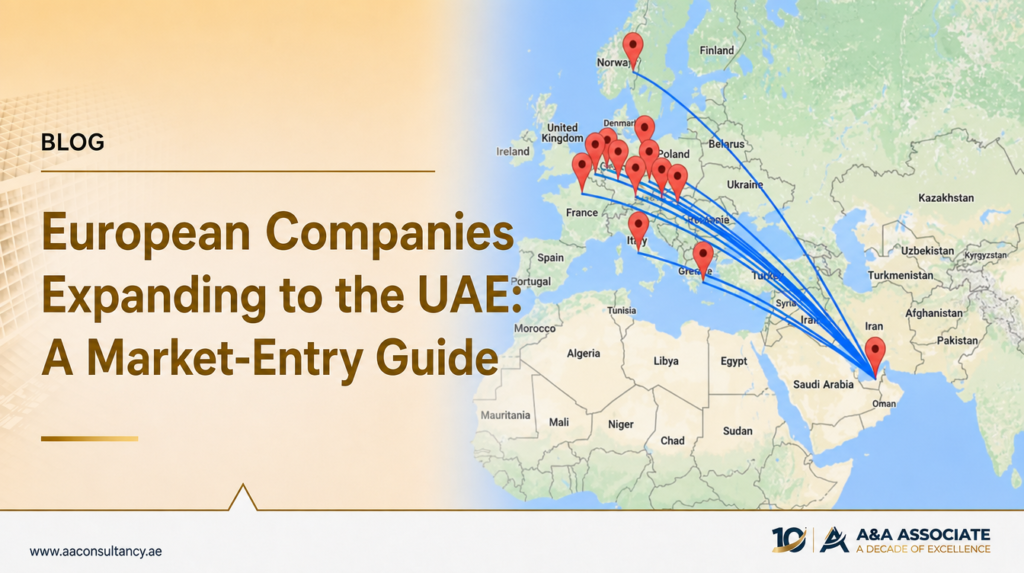
Jurisdiction fit comes first: DIFC is one of several strong UAE options, and the right choice depends on your activity, customers, and structure rather than on any centre's growth rate. Firms weighing the options often start by comparing different UAE business jurisdictions against their model before narrowing down. Regulatory compliance is genuine work, particularly for financial activities where authorisation is a process measured in months and maintained continuously. The UAE's corporate tax regime applies across structures, with treatment depending on your specific facts, so understanding UAE corporate tax obligations belongs in the planning phase rather than the first filing season. Accounting and audit expectations track international standards, and entrants do better arriving with professional accounting and compliance support arranged than retrofitting it. Licensing scope, industry-specific rules, and substance expectations all reward the same habit: decide what the business actually does before deciding where it sits. For companies at that earlier question, strategic business advisory is the cheaper stage to get opinions, and entrepreneurs ready to move can explore their UAE expansion options with structure rather than urgency.
Future Outlook
The milestone lands inside a larger plan. The Dubai Economic Agenda D33 targets doubling the emirate's economy by 2033 and placing Dubai among the world's top financial cities, and DIFC is explicit infrastructure for that ambition. The AI-native transformation, if executed, would give the centre a differentiation no incumbent hub currently claims. The physical expansion into Zabeel District provides room for the next 10,000-company chapter, and the family wealth machinery positions Dubai for a generational transfer of private capital that is only beginning.
| Year | Milestone |
|---|---|
| 2004 | DIFC opens with its own common-law jurisdiction and courts |
| 2017 | FinTech Hive launches as the region's first financial technology accelerator |
| 2025 | Region's largest insurance hub: $4.2bn in gross written premiums |
| Early 2026 | Dubai reaches 7th in the Global Financial Centres Index; regulated firms pass 1,000; AI-native strategy announced |
| H1 2026 | 10,018 active companies; AI cluster reaches 1,933 firms |
Amiri's summary claim, that "the global centre of gravity for finance continues to shift toward Dubai," is the kind of line every financial centre CEO would like to say. The difference in 2026 is that the numbers underneath it are moving in the direction the sentence points.
Frequently Asked Questions
Why is DIFC important?
What milestone did DIFC reach in 2026?
Why are international companies choosing DIFC?
What industries are growing fastest in DIFC?
How does DIFC support AI companies?
What is an AI-native financial centre?
Why is Dubai attracting financial institutions?
Which major firms recently established offices in DIFC?
How large is DIFC's wealth management sector?
Why are family offices choosing Dubai?
What are DIFC foundations used for?
How does DIFC contribute to Dubai's economy?
Is DIFC only for financial companies?
What is Dubai's Global Financial Centres Index ranking?
Does DIFC growth mean it's the right jurisdiction for every business?
What should investors watch after this milestone?
Financial centres are ultimately trust machines: institutions deposit confidence, and the returns compound. DIFC's 10,018 companies are twenty years of those deposits, and the composition of the growth, institutional finance, technology, and generational wealth arriving simultaneously, suggests the compounding has further to run.
Evaluating a UAE expansion?
As Dubai's financial ecosystem continues to evolve, businesses entering the UAE should carefully evaluate the most suitable jurisdiction, tax implications, and compliance requirements. A&A Associate LLC helps investors assess their options and make informed expansion decisions through tailored advisory, tax, accounting, and corporate support services.
Speak With an AdvisorThis article is for informational purposes only and does not constitute investment, legal, or tax advice. Figures are drawn from DIFC's published H1 2026 results and official sources; verify current data and requirements with the relevant authorities before making business decisions.