Port Rankings · Trade Intelligence · JAFZA
The Numbers Behind the Ranking
Jebel Ali was previously a top-10 port for years before slipping out of the rankings in 2019 amid a tougher patch for regional throughput. The return is built on three consecutive years of growth.
2022
13.97M TEU
Base year of recovery
2023
14.47M TEU
▲ +3.6% year-on-year
2024
15.5M TEU
▲ +7.1% year-on-year
Highest annual volume since 2015

Momentum carried into 2025. DP World reported roughly 9% year-on-year growth in origin-and-destination (O&D) container volumes — cargo that actually starts or ends its journey in the UAE. DP World's 2025 revenue rose 22% to $24.4 billion, with adjusted EBITDA climbing 18% to $6.4 billion. In July 2025 alone, Jebel Ali handled 1.4 million TEU — a single-month record. The port's rated capacity stands at 19.4 million TEU across four terminals.
Why Jebel Ali Climbed Back
Three factors did the heavy lifting.
Factor 01
Diversified Trade Flows
As shipping lanes reorganized around Red Sea disruption and a slower European import cycle, Jebel Ali absorbed cargo re-routed from Mediterranean and Suez-adjacent hubs. Its position 150–160 nautical miles south of the Strait of Hormuz makes it a natural pivot point for east-west traffic and a redistribution hub for Asia–Africa, Asia–Europe, and intra-Gulf trade.
Factor 02
Carrier Confidence
All major alliances continue to call Jebel Ali on their core east-west loops. That density of services translates directly into shorter dwell times and more competitive freight rates for shippers — the kind of advantage that wins shifting cargo from less-served regional ports.
Factor 03
Operational Investment
DP World has continued to invest in automation, deeper berths, and on-dock rail and customs systems. The result is a port that consistently posts above-industry productivity figures even as throughput climbs.
What It Means If You Trade Through the UAE
A top-10 ranking is a proxy for three things shippers actually care about: liner coverage, predictability, and cost.
Importers & Exporters
More carrier services means more sailings and fewer feeder transhipments. That typically shortens lead times by days on Asia-to-Europe or Asia-to-Africa cargo. It also gives shippers stronger negotiating leverage on contract rates.
Regional Distributors
The port's scale means inventory can sit closer to end markets without losing the optionality to re-export. Goods landed at Jebel Ali can move into Saudi Arabia, Oman, Iraq, East Africa, or the Indian subcontinent without re-routing through a secondary hub.
UAE Economy Broadly
The ranking reinforces what the country has been signalling for a decade: that Dubai is built to be a trading capital, not just a destination market. That positioning continues to attract trading companies, regional HQs, and warehousing operators.
What It Changes for Businesses Setting Up in JAFZA
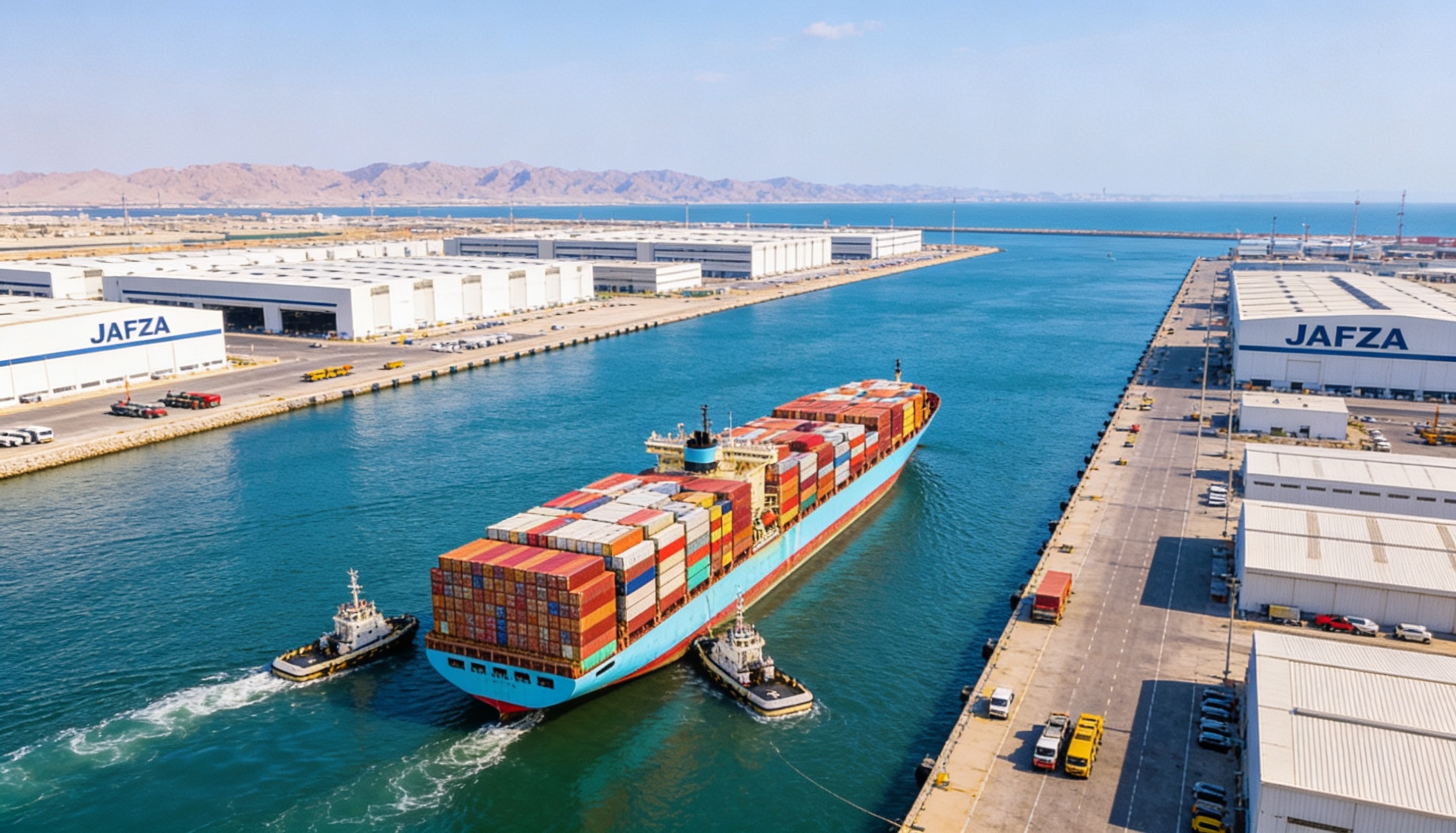
The Jebel Ali Free Zone (JAFZA) is the commercial twin of the port — co-located, customs-bonded, and home to more than 9,000 companies. The port's strengthened ranking has direct implications for businesses looking at JAFZA as a setup destination.
Trading Companies
Benefit from faster customs clearance and direct ramp-to-warehouse logistics. A JAFZA licence paired with a port-adjacent warehouse removes a layer of trucking, brokers, and clearance time that traders setting up elsewhere in the UAE still have to manage.
E-Commerce & Fulfilment
Access to bonded warehousing within walking distance of the quay, plus simplified re-export procedures — useful for any business shipping into Africa, the Levant, or South Asia.
Industrial & Light Manufacturing
Can take raw materials in and ship finished goods out without leaving the free zone's customs envelope — an efficiency that directly reduces landed cost for buyers.
Global Logistics Infrastructure
The port's ranking is not just a status symbol. It is a signal that the logistics infrastructure underpinning a JAFZA company is functioning at the global frontier — not merely the regional one.
The combination kept Jebel Ali growing while several of its global peers stagnated — and that is what moved it back into the top 10. For businesses considering JAFZA, the port's ranking translates directly into commercial advantage: shorter lead times, stronger carrier competition, and a logistics backbone that operates at the standard of the world's best.