Investors Dubai: A Practical Guide for Founders

Table of Contents

Free Consultation

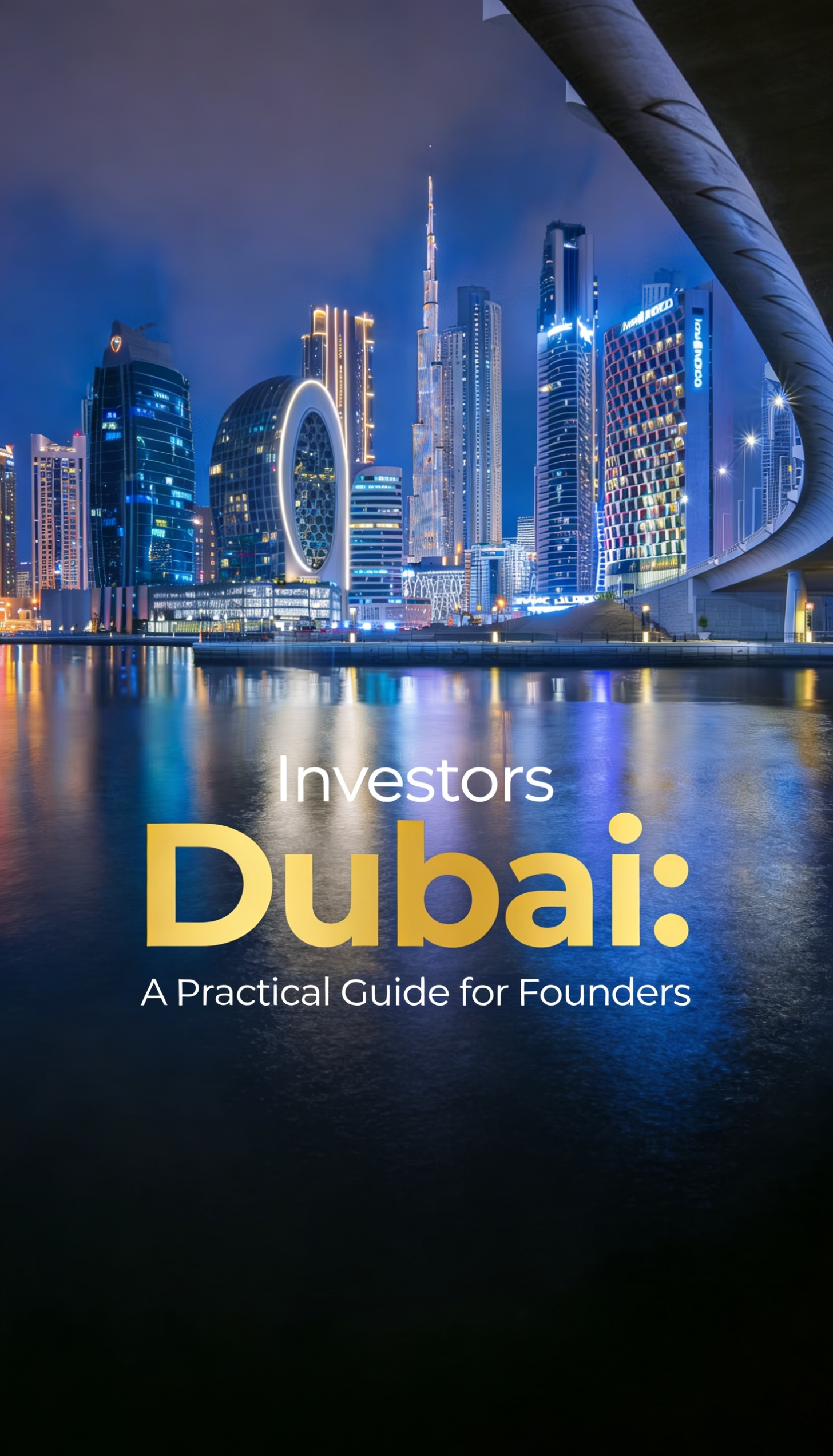
Dubai skyline representing the venture capital and startup ecosystem hub
$3.5T GCC Economy Gateway

Dubai's Rise as a Global Venture Capital Hub

Dubai has emerged as a significant venture capital hub over the last decade, attracting a diverse range of investors and startups from various regions. What started as a gradual momentum around 2015 accelerated dramatically after Expo 2020, driven by policy reforms like the Golden Visa program, which granted 10-year residency to those investing AED 2 million or more.

Today, early-stage founders worldwide look to Dubai for seed funding and growth capital—and for good reason. Dubai's strategic position, situated at the intersection of Europe, Asia, and Africa, makes it a gateway to the $3.5 trillion GCC economy and the broader MENA markets.

This guide walks you through exactly how to navigate this relationship-driven ecosystem, from understanding investor types to securing your first meeting.

2015 Ecosystem Momentum Began
10 Yr Golden Visa Residency
MENA Broader Market Access
Venture Capital Firms Angel Investors Family Offices Govt-Backed Entities

Why Dubai Is Attracting Investors and Startups

UAE venture funding crossed $2 billion across 218 deals in 2025, with Dubai capturing 93% of H1 tech funding. Early-stage funding dominates the deal volume in Dubai's venture capital ecosystem, although Series A and B rounds are increasingly common as startups mature. The venture capital landscape in Dubai is characterized by a mix of government-backed funds, regional family offices, and global venture firms, with a strong focus on sectors like fintech, SaaS, and logistics.

For institutional investors, Dubai offers stable English-common-law-based regulation through the Dubai International Financial Centre, zero capital gains tax, and robust financial infrastructure with 900+ firms operating in DIFC alone. Founders come for 15-minute company setups in free zones, 100% foreign ownership, and instant access to 400 million MENA consumers.

$2B+ UAE Venture Funding in 2025
93% Dubai Share of H1 Tech Funding
900+ Firms Operating in DIFC

Key Incentives for Investors & Founders

Zero Tax No personal income tax and no capital gains tax for founders and investors
Regulatory Sandboxes Fintech compliance cut from 18 months to just 3–6 months
Government Initiatives Dubai Future District Fund and the DIFC Innovation Hub driving deal flow
Geographic Advantage Strategic proximity to Europe, Africa, and Asia for scaling operations

Key Types of Dubai Investors

Not all investors in Dubai operate the same way. Understanding who you're pitching to shapes everything from your deck to your ask.

Angel Investors
$25K – $200K Checks

Dubai angel investors often operate through syndicates like Dubai Angel Investors or Womena. Many are ex-founders or executives with deep regional networks, providing hands-on mentorship alongside capital. DAI typically deploys in pre-seed and seed rounds, prioritizing MENA traction over global hypergrowth.

Pre-Seed Seed Mentorship MENA Focus
Venture Capital Funds
$500K – $10M Tickets

Established funds like BECO Capital and Shorooq Partners focus on early-stage technology companies in fintech, proptech, and SaaS. These firms often have an extensive network across GCC markets and can open doors to follow-on investors.

Fintech Proptech SaaS GCC Network
Family Offices
Series A & Beyond

High-net-worth individuals and family offices from UAE and GCC dynasties typically enter at Series A or later, once startups show a track record of revenue. They offer patient capital but often expect board seats and clear GCC expansion roadmaps.

Patient Capital Board Seats GCC Expansion
Corporate & Government-Backed
Strategic Capital

Entities like Mubadala and Dubai Future Foundation deploy capital through fund-of-funds, emphasizing strategic sectors like AI and climate tech. They provide strategic support but require rigorous due diligence on ESG and compliance matters.

AI Climate Tech ESG Focus Fund-of-Funds

Dubai's Startup Geography and Investment Hubs

Investor meetings in Dubai are clustered around specific districts, each with distinct roles in the ecosystem. Knowing where to be puts you in front of the right decision makers.

Dubai International Financial Centre (DIFC)

Institutional VC & Angels

This is the core hub hosting banks, global funds, regional venture capitalists, and many angel syndicates. The DIFC free zone company setup framework supports this ecosystem, and the DIFC Innovation Hub runs regular pitch events and accelerator programs, channeling over $500 million in annual VC flow. Most institutional investors take meetings here.

$500M+ Annual VC Flow

Dubai Internet City / Media City

Tech & SaaS Founders

These TECOM zones cluster 1,600+ tech and media firms including Microsoft and enterprise SaaS companies. SaaS founders and consumer internet startups base operations here, meeting sector-focused investors at events like RiseUp Summit.

1,600+ Tech & Media Firms

Business Bay / Downtown Dubai

Family Offices & Angels

This area houses 200+ family offices and investment boutiques. Co-working spaces like WeWork and Blueprint host informal coffee meetings where 40% of angel deals reportedly close. Proximity to Burj Khalifa networking events adds to the appeal.

200+ Family Offices

Other Notable Free Zones

Crypto · Web3 · Hardware

DMCC serves as the crypto and Web3 hub with VARA licensing, attracting specialized investors in blockchain. Dubai Silicon Oasis draws hardware and logistics startups, while IFZA offers fast setup for 2,000+ business activities across sectors.
2,000+ Activities via IFZA

Angel Investors and Seed Funding in Dubai

Angel investing plays a critical role in Dubai's startup ecosystem, especially in pre-seed and seed rounds. For early-stage founders without revenue, angels often represent the first external capital check.

$100K–$300K Avg. Pre-Seed Round Size
$500K–$1.5M Typical Seed Round Range
$4M–$8M Seed Stage Valuations

Angel investors in Dubai often provide capital to startups in pre-seed and seed rounds, playing a crucial role in the early-stage funding landscape. Many UAE angels are willing to take risks on startups that haven't yet proven market fit. Early-stage funding is characterised by a mix of angel investors and seed funds, with many investors looking for startups that demonstrate strong unit economics and regional traction. Angel rounds are frequently structured as part of a broader regional strategy, with angels co-investing alongside funds from neighbouring countries like Saudi Arabia or Qatar.

How to Appeal to Angels
  • Show a clear problem-solution fit with early customer traction in MENA
  • Present realistic valuations (avoid sub-$3M pre-money)
  • Outline a concrete path to scale operations across GCC markets
  • Prepare a 10-slide deck with unit economics and CAC/LTV metrics
What to Avoid
  • Cold pitching without warm introductions
  • Focusing exclusively on US or European metrics
  • Ignoring standard liquidation preferences in term sheets
  • Underestimating the importance of in-person meetings

How to Find and Approach Investors in Dubai

70%

of deals in Dubai stem from warm introductions rather than cold outreach — building trust in person matters more than mass email campaigns.

Founders in Dubai typically find investors through warm introductions, local venture events, and investor research tools like OpenVC and LinkedIn. Research potential investors using Crunchbase, PitchBook, MAGNiTT, and curated lists that track active Dubai investors by stage and sector.

Step-by-Step Approach

  1. Refine your deck with ARR, CAC/LTV, and GCC TAM data
  2. Build a target list of 30–50 investors matched to your stage and industry
  3. Request warm intros through accelerators, LinkedIn connections, or DIFC events
  4. Schedule 20-minute video or in-person meetings — emphasize UAE entity and Saudi expansion plans
  5. Follow up with data room access, targeting 10% conversion to term sheets

Highlight cross-border potential in every pitch. Most investors look beyond Dubai to the broader Middle East — demonstrating regional scalability increases your interest from both angels and VCs.
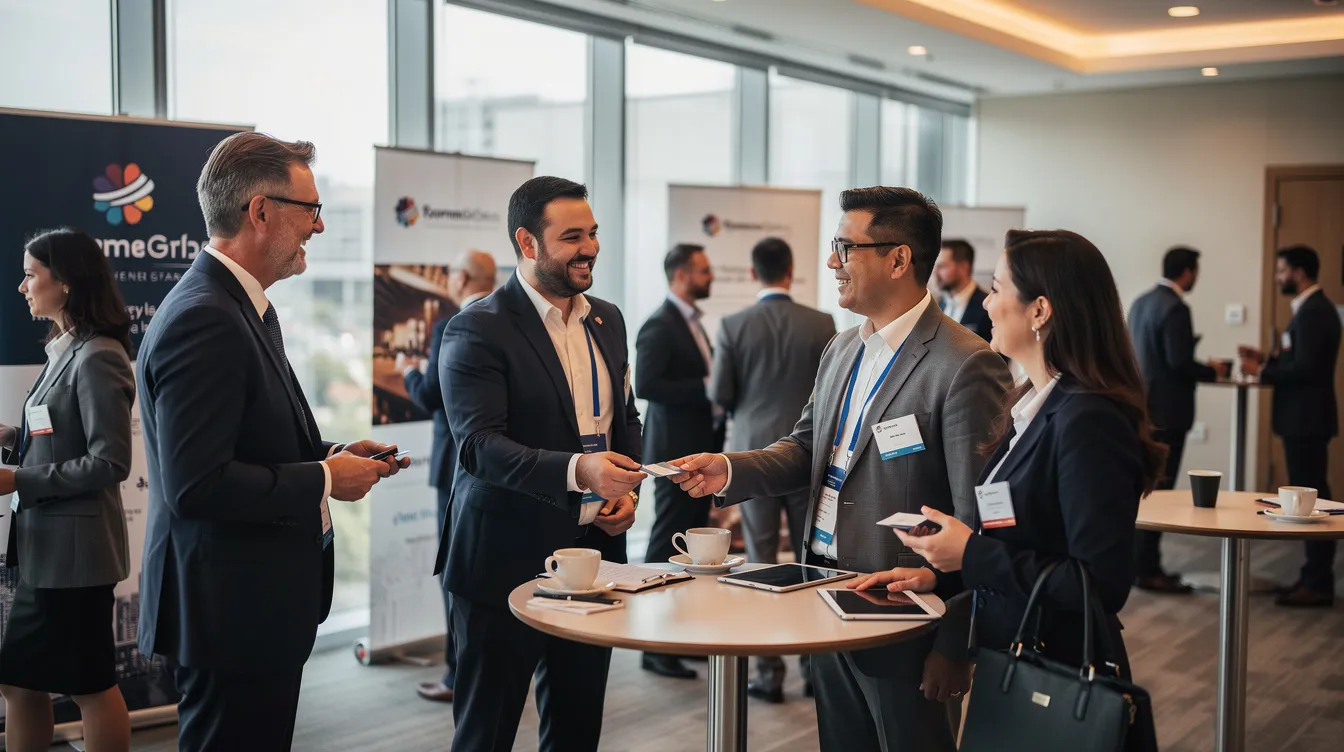
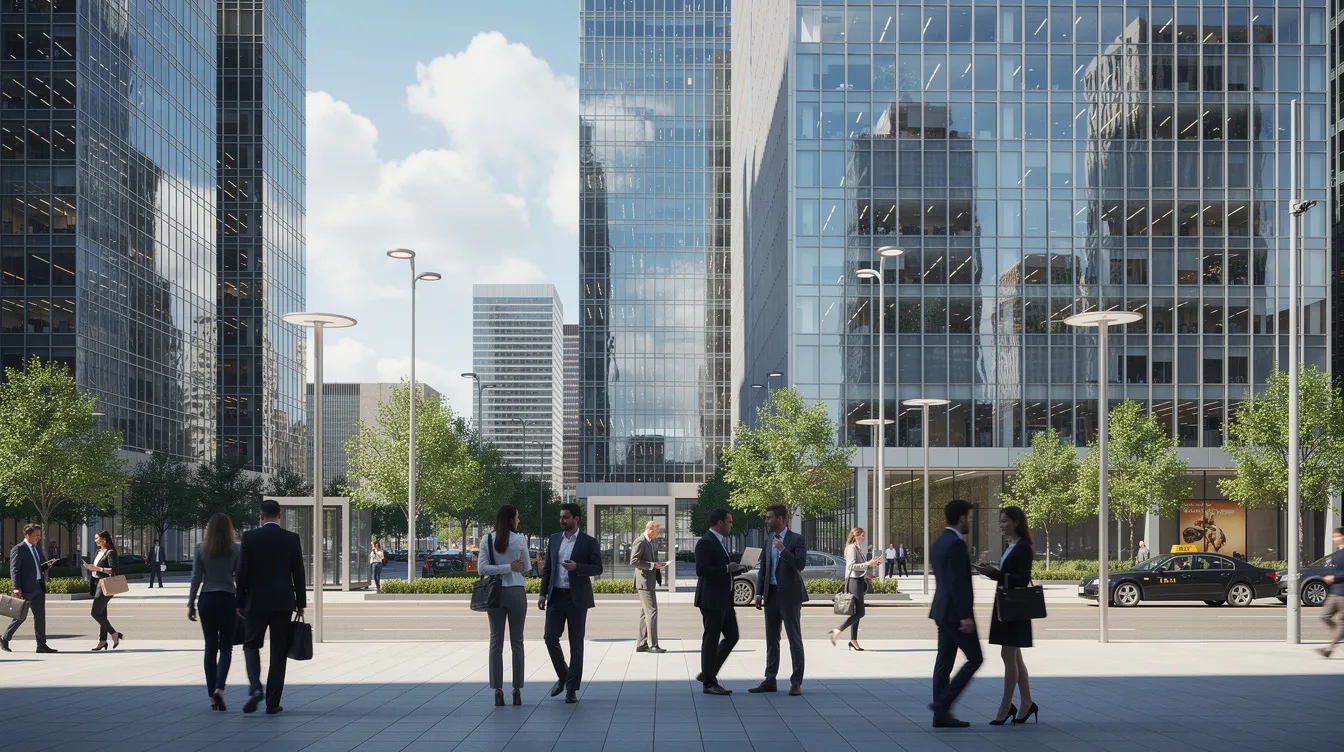
Founders networking with investors at a Dubai venture capital event

Dubai's investor ecosystem — from DIFC pitch events to regional VC roundtables

Notable Venture Capital and Early-Stage Firms in Dubai

This snapshot highlights prominent VCs actively deploying capital from Dubai into early-stage technology companies.

BECO Capital

Pre-seed → Series A Proptech · SaaS

Operating since 2011. Portfolio includes Property Finder, a MENA market leader.

AUM: $100M+

Shorooq Partners

Seed → Series B Fintech · Web3

Closed $150M Fund III in 2024. Offers venture debt capabilities alongside equity.

Fund III: $150M

Wamda Capital

Early Growth Multi-sector

MENA pioneer since 2013 with 50+ investments across industries from its Dubai hub.

50+ Portfolio Companies

VentureSouq

Seed Fintech · Logistics

DIFC-based. Deploys $250K–$3M per seed-stage fintech and logistics venture.

Ticket: $250K–$3M

Global Ventures

Series A Consumer · AI

Writes $1–5M Series A checks in consumer and AI with strong Saudi Arabia ties.

Ticket: $1M–$5M

Middle East Venture Partners (MEVP)

Seed Stage SaaS · Healthtech

Seeding SaaS and healthtech across the GCC since 2006 with regional expertise.

GCC Focus Since 2006

Dubai has become a significant venture capital hub, particularly for early-stage funding, with a focus on sectors like fintech, SaaS, and logistics. These firms remain sector agnostic to some degree but prioritize high growth potential in regional markets.
What Dubai Investors Look For in Startups

While each investor differs, common evaluation criteria have emerged across Dubai's ecosystem over the past decade. Many Dubai angel investors are former operators or executives with deep regional networks, often participating in pitch events and syndicates alongside local VC funds — they know what makes companies work here.

Key Criteria Investors Assess

Team

Founders with GCC experience, Arabic fluency, or Saudi operations knowledge

Customer Traction

$200,000+ MRR at seed, 40%+ retention rates, positive unit economics

Market Size

$1 billion+ addressable TAM in GCC with a clear growth path

Regulatory Clarity

DIFC or ADGM incorporation for fintech, clean cap tables under 15% dilution per round

Defensibility

IP, network effects, or operational moats

Exit Potential

Clear path to IPO on ADX/DIFC or acquisition by regional players

The diligence process for sectors like fintech or climate tech often includes extra compliance questions — prepare your documentation early to avoid delays in investor conversations.

The path to raising capital in Dubai starts with understanding who invests, where they meet, and what they value. Start by mapping your target investor list, then leverage warm introductions to schedule your first meetings — ideally aligned with the best UAE free zones for company formation.

Frequently Asked Questions

How early will Dubai investors fund a startup?

Dubai angels and seed funds invest from the idea stage with $100,000-$300,000 for prototypes if founders have domain expertise. Seed rounds typically come at the MVP stage with $50,000+ MRR, while Series A follows $1 million ARR. About 40% of UAE 2025 deals were pre-Series A.

Do I need to be physically based in Dubai?

Not strictly, but 75% of investors prefer local presence for trust-building. Cross-border teams can raise capital if the Middle East is a core market. Mainland company formation in Dubai and Golden Visa programs through property or business investment via an investment or holding company can ease this without full relocation.

How important is incorporation in the Dubai International Financial Centre?

DIFC is crucial for fintech and AI startups needing regulatory sandboxes and English law protections. Mainland or DMCC suits commerce and crypto ventures. Offshore structures work for Series A+ if a UAE subsidiary handles operations.

Can foreign founders with no local network raise in Dubai?

Yes—accelerators like DIFC FinTech Hive facilitate 80% of their cohort’s investor intros. Building relationships through partners, attending GITEX, and leveraging LinkedIn typically takes 6-12 months but is achievable without an initial investment in local connections.

Share

Free Consultation