
What Is AI Automation in Accounting?
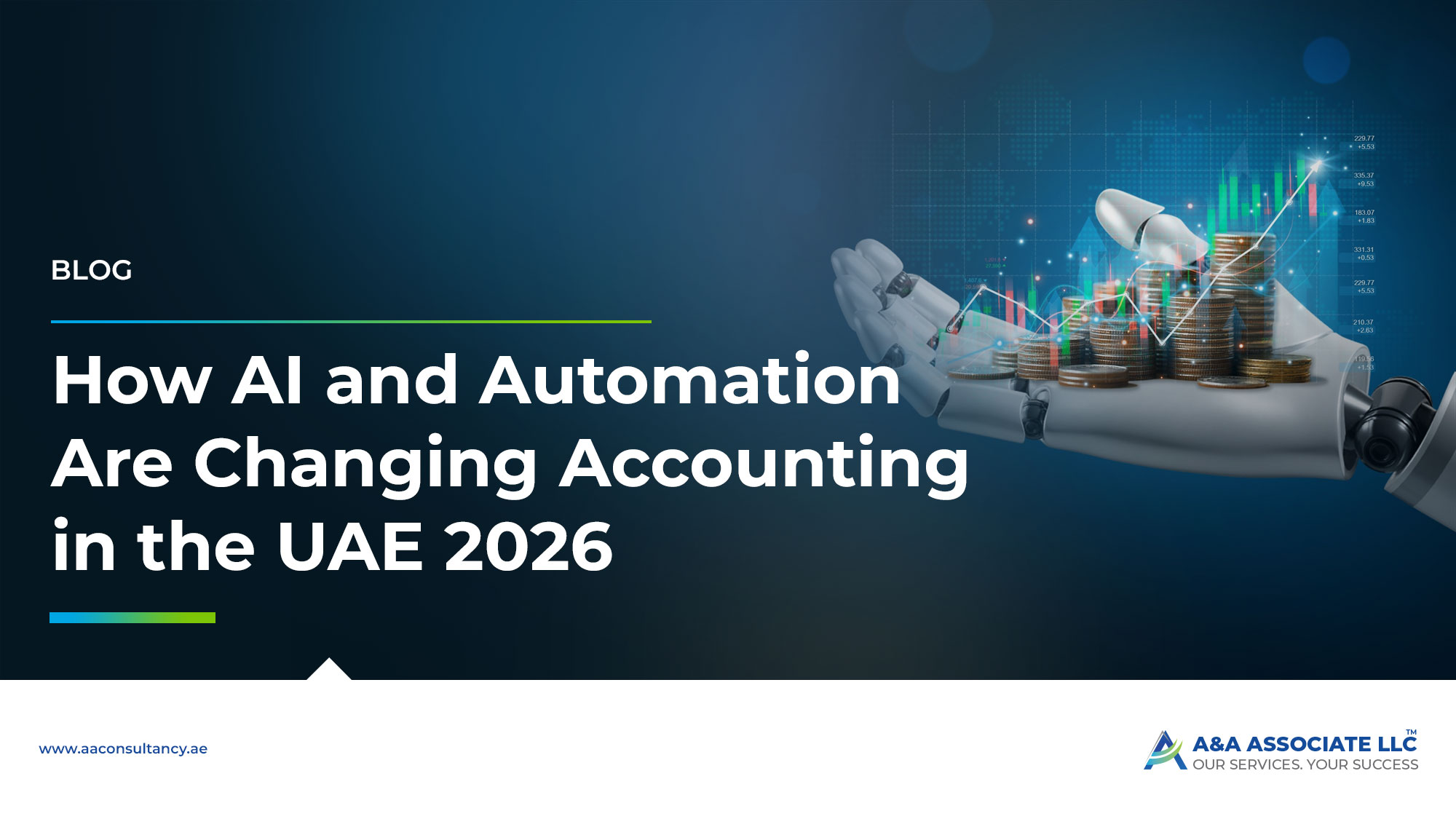
AI automation in accounting refers to software systems that read, sort, and analyse financial data with minimal human input. These systems go beyond basic rule-based automation and use learning models to improve accuracy over time.
AI and Accounting in the UAE
- Mandatory e-invoicing: The Ministry of Finance now requires e-invoicing for businesses. This means you no longer send simple PDFs. Instead, you exchange digital data files. AI reads these files and records them in your books instantly. This removes the need for manual typing and stops data entry errors.
- Digital tax audits: The Federal Tax Authority (FTA) now uses machine-readable formats for tax reviews. This means the government uses software to check your tax records digitally. AI accounting software ensures your data stays in the correct format so you are always ready for a tax review.
- 3. Real-time financial updates: You do not have to wait until the end of the month to see your profit or loss. AI dashboards update as soon as a transaction happens. This gives you a live view of your cash flow and expenses. It helps you make faster decisions for your business.
AI Accounting Software vs Traditional Accounting Systems
There is a clear difference between traditional methods and modern AI accounting software:
Area | Traditional Accounting | AI Accounting Software |
Data entry | Manual input and checking | Automated reading and posting |
VAT preparation | Period-based review | Ongoing reconciliation |
Error detection | Found after reporting | Flagged at the point of entry |
Cash flow insight | Historical reports | Forward-looking alerts |
Can AI Replace Accountants?
Many business owners ask whether AI can replace accountants, especially as automation becomes more advanced. While AI has transformed the industry, it cannot replace the human oversight required for complex financial management.
What AI Can Do
- High-volume processing: AI handles math, bank reconciliations, and data entry in seconds.
- Error detection: It identifies mismatched TRNs or filing inconsistencies instantly.
- Data sorting: It categorizes English and Arabic invoices into the correct ledgers.
- Automated bookkeeping: OCR and AI read invoices, receipts, and bank statements, automatically post transactions to the correct GL accounts, and detect duplicates or errors in real time.
- Financial analysis and reporting: It performs variance analysis (budget vs. actual) and delivers EBITDA, cash flow, profitability, trend, and ratio insights.
What Accountants Do
- Strategic advisory: Accountants cross-check and interpret data to provide growth advice and tax planning.
- Ethical judgment: Humans manage complex audits and regulatory negotiations that require nuance.
In the UAE, the most successful firms use a hybrid model. While AI can manage the heavy data workload, businesses still need a professional accounting service in Dubai to interpret data and keep them compliant.